


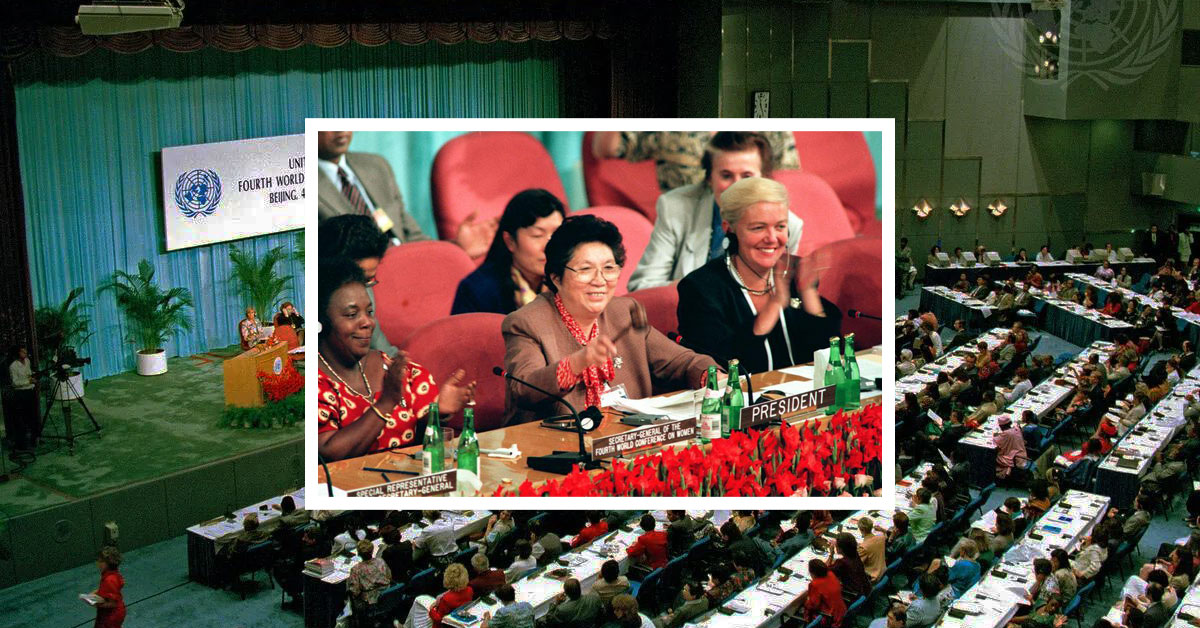
Beijing, 31 Years Ago… What Happened? And What Remains?
A reflection on representation, voice and the right to be recognised as authoritative subjects.
4 September 1995. Beijing.
Thirty-one years ago, the United Nations Fourth World Conference on Women opened.
For two weeks, representatives of governments, civil society organisations, activists and people from all over the world came together to discuss an issue that, even today, is far from resolved: how to create genuine conditions of equality for women.
The Conference concluded with the adoption of the Beijing Declaration and Platform for Action, endorsed by 189 governments.
At the same time, in Huairou, thousands of people were taking part in the NGO Forum: a space for dialogue, advocacy, training, relationship-building and political engagement that brought together more than 30,000 participants.
It was not just a conference.
It was a moment when institutions and civil society came together — not always without tension — around a political platform that identified twelve areas considered crucial: from poverty to education, from health to violence, from employment to participation in decision-making, from human rights to the media, from the environment to the situation of girls.
A major agenda.
A major promise.
And a major question.
But let us leave them there for a moment.
Because when we talk about Beijing, there is a risk of telling only the story of what was achieved.
Listing the progress, recalling the gains, counting the reforms. And it is right to do so.
But an international declaration does not live only in the words it contains; it also lives in the people those words manage — or fail — to reach.
And so, thirty-one years later, perhaps it is worth shifting the question slightly.
Not only:
how much has changed?
But:
for whom?
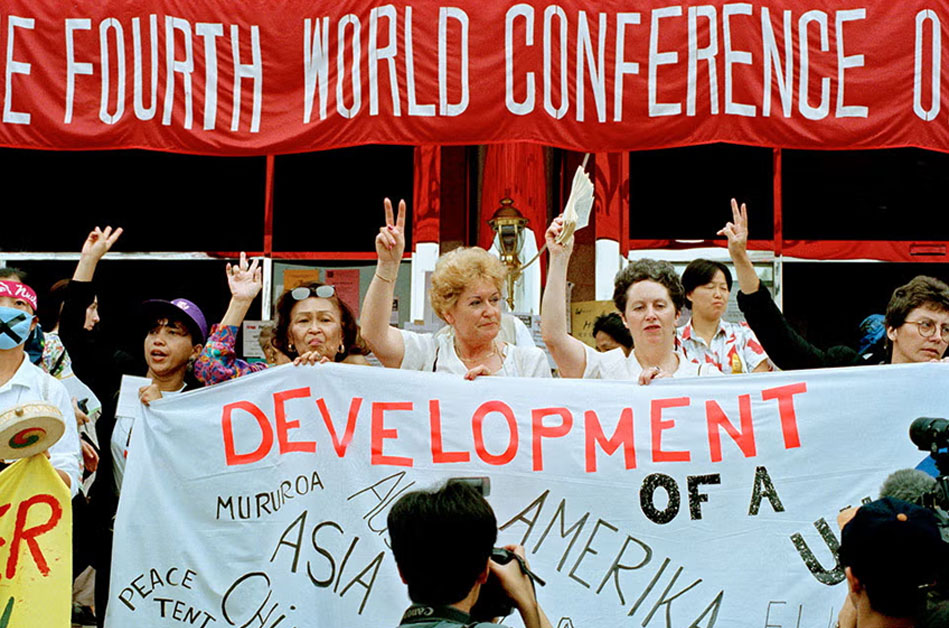
Because when we say “women”, who are we talking about?
It is a less straightforward question than it may seem.
The category of “women” does not describe a single experience.
Women have different experiences depending on their origin, social class, age, economic circumstances, disability, migration history, cultural background, sexual orientation, position in the world of work and access to power.
And these differences are not simply details to be added at the end of a conversation that has already been shaped.
They change the way that conversation is shaped; they change the priorities; they change the questions; they even change the words we use to describe what we consider to be a problem.
This is why the question of representation is not secondary.
It is political.
Being represented does not necessarily mean having a voice.
A woman can be present in a photograph, a report, a project, a campaign.
She can be named.
Her story can be told.
She can even be described as a “protagonist”.
And yet she may not be the one deciding what gets told.
That difference matters.
Because participation does not simply mean being there. It means being able to help decide what is said, how it is said and by whom.
And this is where, in our view, Beijing continues to be relevant.
Not only as a historical document, but as a question that remains open.
Thirty years later, the picture is not a static one. In 2025, on the occasion of Beijing+30, the United Nations conducted a global review based on reports from 159 States. The review recorded significant progress, but also a reality that continues to be deeply marked by gender discrimination. That review led to a new Beijing+30 Action Agenda, structured around six priorities: digital transformation, poverty reduction, the elimination of violence, equality in power and decision-making, peace and security, and climate justice.
In short: much has been done.
But not enough.
And above all, not in the same way for everyone.
And this is precisely where the question of representation comes knocking at the door again.
Who speaks on behalf of women?
Who decides what the priorities are?
Who is invited to participate?
Who is listened to?
Who is recognised as an authoritative voice?
And further: who can speak in their own voice without someone else having to translate, explain or validate their experience?
These are questions that particularly concern us.
Because a woman with a migration history is not simply someone to be taken care of.
She can be a worker. A professional, a mediator, a researcher, an activist, a citizen, an artist.
And above all, she can speak for herself.
Not because her experience is automatically more truthful than anyone else's.
But because no representation can be complete if those being represented are not also given the opportunity to speak for themselves.
This is also how we look at Beijing.
The Rete Donne delle Diaspore was not created to speak on behalf of all women.
That is not what we claim to do.
We are interested in something different.
We are interested in observing how representations are constructed.
Who enters the rooms where decisions are made.
Who remains at the threshold.
Which voices are considered competent.
Which are listened to only when they are useful for telling a story.
And which, instead, are recognised as capable of producing thought, proposals and vision.
This is why we consider ourselves active observers.
We observe.
We participate.
We question.
We speak up.
We are not spectators in a debate that concerns other people.
We are part of that debate.
And, when necessary, we ask a few uncomfortable questions too.
Perhaps this is one of Beijing's less visible legacies.
Not only a platform for action.
Not only a series of commitments.
But the idea that political transformation cannot be built without the people whose lives that transformation is meant to affect.
And that participation cannot be reduced to presence.
Because a room full of women is not necessarily a room in which women have power.
A round table is not necessarily a space for dialogue.
Representation is not necessarily a voice.
And a voice is not necessarily heard.
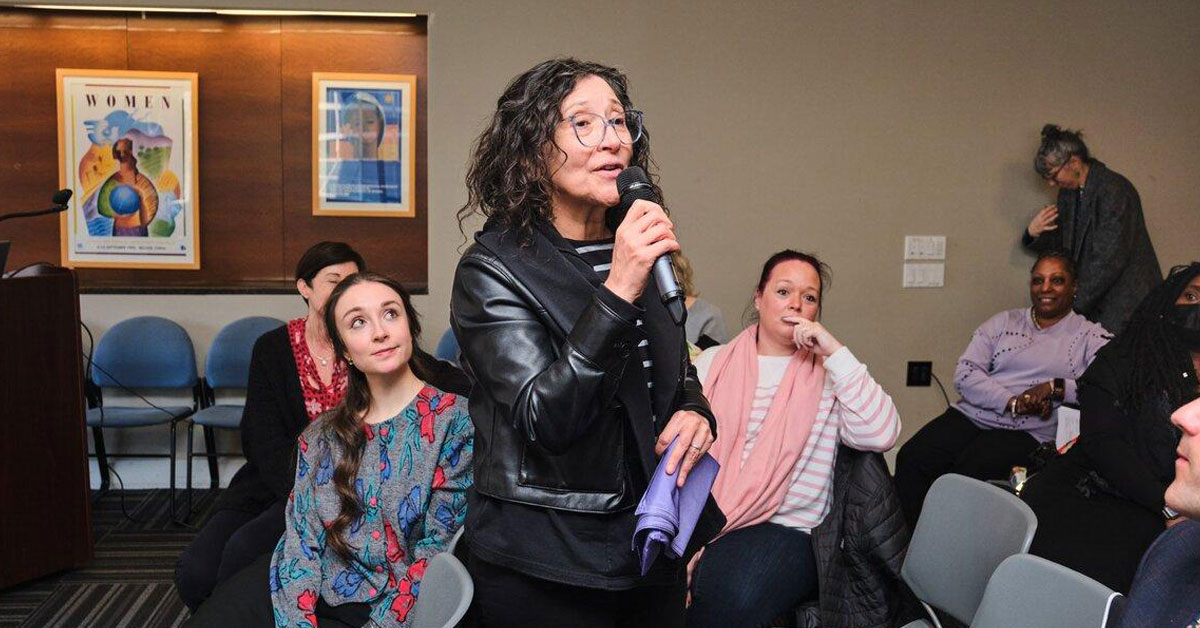
Thirty-one years later
Perhaps the question Beijing leaves us with is not only:
how much has the world changed for women?
But also:
how much has the way the world listens to women changed?
And further:
who has had the right to speak on their behalf?
These questions do not erase what Beijing has achieved.
On the contrary.
They help us take that promise seriously.
Because an international platform can point us in a direction.
But it is people, organisations, movements and communities who continue to put that direction to the test.
Even thirty-one years later.
Even when institutional language seems to have already said everything.
Even when it seems there is nothing left to add.
Sometimes, however, there is still a question.
And that alone is enough.
In the meantime, we keep watching.
And speaking.
Because we do not need to move everything.
Sometimes all it takes is placing a small stone in the right place.
To make those passing by stop.
And look more closely.