


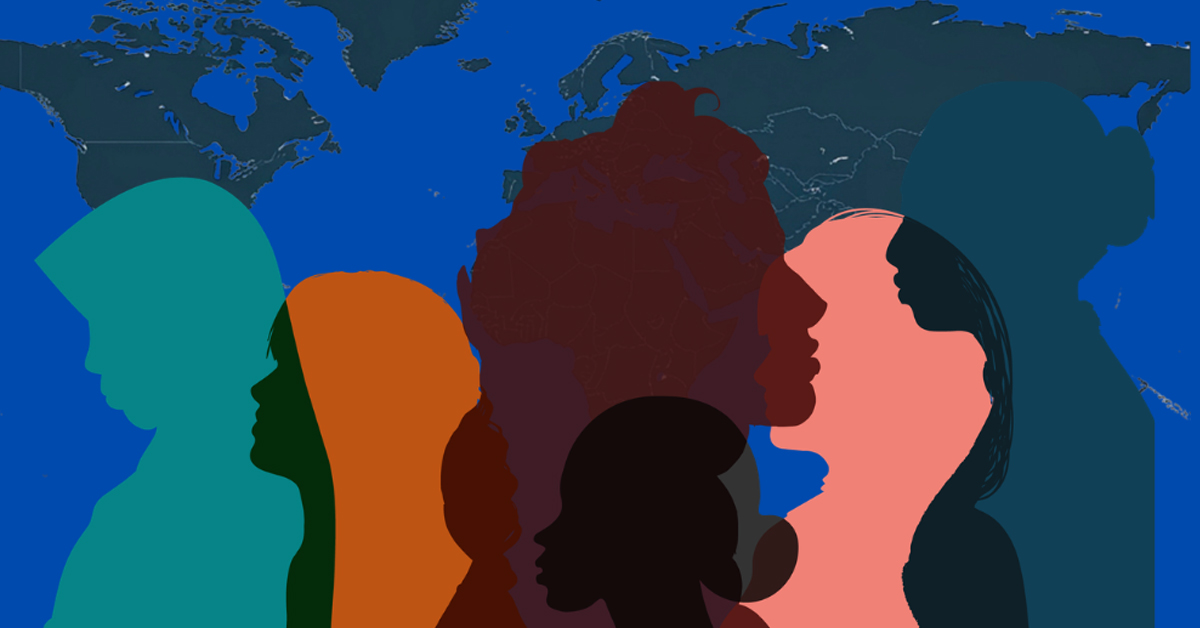
What Future for Peacebuilding?
Twenty-five years after the Women, Peace and Security (WPS) Agenda and ten years after the Youth, Peace and Security (YPS) Agenda: achievements and future perspectives.
In recent years, peace has returned to the centre of international debate. Armed conflicts are multiplying, geopolitical crises are increasingly intertwined with climate, economic and social challenges, and there is growing awareness that security can no longer be understood exclusively through a military perspective. Today, speaking about peace means reflecting on the quality of relationships, democratic participation and the capacity of institutions to accompany increasingly complex and interconnected societies.
Within this context lie two of the United Nations' most important normative frameworks: the Women, Peace and Security (WPS) Agenda, launched in 2000 through Security Council Resolution 1325, and the Youth, Peace and Security (YPS) Agenda, established in 2015 through Resolution 2250.
Both marked a paradigm shift. For the first time, women and young people were no longer regarded solely as groups to be protected in situations of conflict, but as actors in prevention, mediation, reconstruction and social cohesion. This vision aligns with the 2030 Agenda for Sustainable Development and recognises peace as a participatory process based on shared responsibility and the enhancement of skills and knowledge.
Twenty-five years after Resolution 1325 and ten years after Resolution 2250, it is therefore legitimate to ask what these two agendas have achieved.
The results are far from negligible. The number of National Action Plans dedicated to implementing the WPS Agenda has increased, while training programmes, international networks, university courses and initiatives aimed at young people engaged in cooperation, diplomacy, mediation and peacebuilding have expanded. At the same time, the international debate has progressively recognised that lasting peace requires more inclusive decision-making processes.
The field of education also reflects a significant transformation. Today, women represent around half of all university graduates and doctoral researchers in Europe. However, their presence gradually declines at the highest levels of research, institutions and decision-making processes. This dynamic invites reflection on the relationship between education, participation and leadership.
The same question runs through peace policies.
United Nations data show that women's participation in peace negotiations remains limited, while young people's involvement in decision-making processes is often inconsistent. WPS and YPS have undoubtedly expanded opportunities for participation, yet one crucial question remains: how can this participation become a stable presence in the places where public policies are shaped?
Perhaps the question is not simply how many people are sitting around the table.
It concerns the way a society values the wealth of expertise that it has itself helped to cultivate.
Every year, universities, research centres, civil society organisations and institutions invest in preparing new generations of researchers, mediators, lawyers, international relations specialists, cooperation professionals and experts committed to conflict prevention. This body of knowledge represents a valuable resource not only for international organisations, but also for the very quality of our democracies.
European societies are changing. Biographies, skills, forms of citizenship and senses of belonging are evolving. Institutions are called upon to accompany these transformations with foresight, ensuring that diversity becomes a shared resource rather than a source of distance.
From this perspective, the Women, Peace and Security Agenda and the Youth, Peace and Security Agenda represent far more than a collection of United Nations resolutions. They offer a method. They remind us that peace is not built only after conflict has erupted, but long before: by investing in participation, prevention, trust and the ability to create relationships between people, communities and institutions.
This reflection stems from a simple observation. Building peace also means accompanying the transformation of our societies with responsibility and vision. It means creating spaces where different skills, experiences and perspectives can engage in dialogue and contribute to the common good. Not because diversity is a value in itself, but because the complexity of the present requires perspectives, experiences and expertise capable of understanding an increasingly complex reality.
Twenty-five years after the launch of the Women, Peace and Security Agenda and ten years after the Youth, Peace and Security Agenda, the challenge now seems to go beyond expanding participation. It concerns the ability to build continuity between generations, expertise and responsibilities, so that the human and professional capital developed over these years can fully contribute to peacebuilding.
But who will truly build the peace of tomorrow?