


Who Will Build the Peace of Tomorrow?
Beyond the end of wars: peace as an everyday practice of living together
When we think about peace, we often think about the end of a war.
A signed agreement, a ceasefire, a handshake between representatives of countries that, until shortly before, regarded each other as enemies.
It is understandable.
But perhaps peace begins much earlier.
And continues long after.
Because ending a war does not necessarily mean that peace has been built.
Peace begins when it becomes possible to live together again.
And living together is much more difficult than stopping shooting at one another.
It means rebuilding trust, acknowledging wounds, learning to live with differences that do not simply disappear when the weapons fall silent.
It means accepting that conflict is part of living together without automatically turning it into war.
Peace is not the absence of conflict
Perhaps we need to free the word peace from a misunderstanding.
Peace does not mean a society without conflict.
A society without conflict probably does not exist.
There are differences, different interests, different memories, different ideas of justice. There are people who need to be heard and others who need to learn how to listen.
The question is what we do with all of this.
We can turn difference into a threat.
Or we can build a space in which we can remain together, even when we disagree.
This is where peace becomes a practice.
And practices, unlike declarations, take time.
The work of relationships
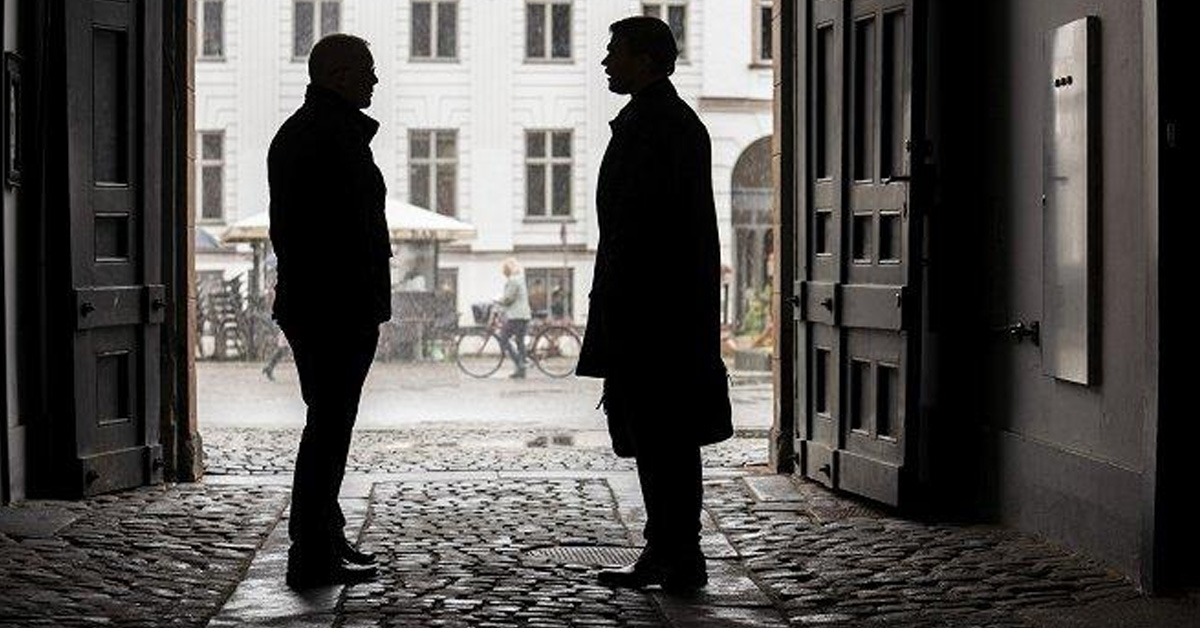
Building peace is hard work.
It requires staying when it would be easier to leave.
It requires listening even when we do not like what we hear.
It sometimes requires giving up the satisfaction of having the last word.
It is an effort that rarely attracts attention.
It does not produce front-page images.
And yet it is made of the same substance as great transformations: people deciding not to see the other as an irredeemable enemy.
Conflict, in this sense, is not necessarily a rupture.
It can also be the place where a relationship encounters difference.
But moving through it takes effort.
It requires maintenance.
Relationships, like bridges, are not built once and for all. They need to be cared for, repaired and crossed again when something breaks.
Living together is never a finished work.
It is an everyday practice.
Sometimes it means taking a step back. At other times, finding new words. At others still, remaining in a disagreement without turning it into a war.
It is an effort we rarely see, precisely because when it works, it does not make the news.
And yet this is where peace takes shape.
Standing on the bridge
This is where the thought of Alexander Langer continues to speak to us.
Langer chose a word that was both simple and difficult: bridges.
A bridge does not erase the differences between its two sides.
It connects them.
Those who build a bridge accept being in between.
They do not belong entirely to one side or the other.
They are exposed.
They need to know both sides.
They have to cross the distance.
And perhaps this is precisely why the bridge is such a powerful image of peace.
Because peace does not necessarily ask us to think in the same way.
It asks us to find a way not to stop talking to one another.
It is not a comfortable position.
It is a choice.
And once a bridge has been built, the work is not over forever.
It needs to be crossed, cared for and maintained.
Peace needs the same kind of attention.
Who will build the peace of tomorrow?

Perhaps this is the question we should be asking ourselves.
Who will build the peace of tomorrow?
Do we expect institutions, governments and high-level negotiators to do it?
They certainly carry an enormous responsibility.
But peace cannot be entirely delegated to those who sit at international negotiating tables.
Because every war begins long before the weapons.
And peace, too, begins long before agreements are signed.
It begins in the way we look at those who are different from us.
In the way we speak about people we do not know.
In our ability not to turn every disagreement into confrontation.
In the possibility of building places where people can meet without first having to prove that they belong to the same side.
The peace that concerns us all
Perhaps the peace of tomorrow will not be built by a single generation, a single country or a single idea.
It will be built by many people who, in different places, try to do something apparently small: keep a relationship open.
Even when it is difficult.
Even when it takes effort.
Even when it would be easier to choose a side and close the bridge.
Because peace is not only the moment when the weapons fall silent.
It is the everyday work that makes it possible to live together again.
And so, to the question we started with — who will build the peace of tomorrow? — perhaps we can answer without looking for a single name.
It will be built by those who choose today not to break off dialogue.
By those who continue to build bridges.
By those who accept the hard work of staying in relationship, repairing it when cracks appear, keeping it alive when letting go would be easier.
Because the peace of tomorrow does not begin tomorrow.
It begins with how we choose to live together today.