


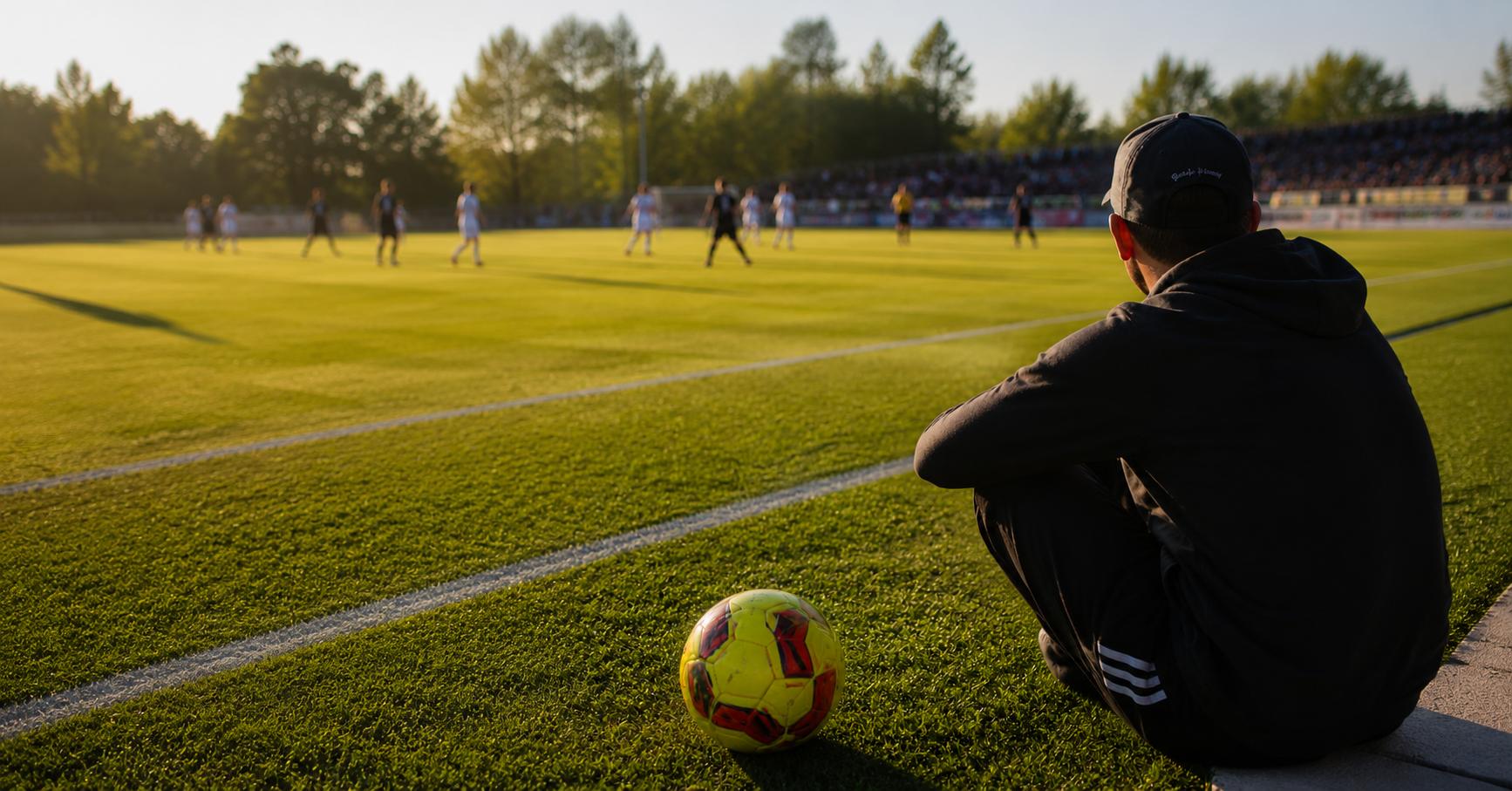
The World Seen from the Sidelines. Why the 2026 World Cup Was Much More Than a Football Tournament
Spain won the World Cup.
A few years from now, this will be the fact that remains in the archives: a final, a trophy, a few statistics, the names of the protagonists.
But every World Cup produces at least two narratives.
The first is the sporting one.
The second is much more difficult to write.
It does not speak only about the matches. It speaks about the society that played, organised, experienced and watched that World Cup.
For this reason, while millions of people counted goals, assists and standings, we tried to look elsewhere.
Not far from the pitch.
Just a few metres away.
From the sidelines.
Because it is there that, sometimes, football stops telling its own story and begins to tell the story of the world.
Over these weeks, the same familiar phrase has been repeated: sport should remain separate from politics.
It is a reassuring statement.
And it is also one of the most fragile.
Because a World Cup is not merely a tournament. It is one of the largest public spaces of our time. It moves governments, cities, economies, identities and millions of people. It crosses borders, shapes collective imaginaries and puts symbols into circulation.
Politics, after all, begins precisely here: in the polis. In the shared space where a community represents itself, debates, recognises itself and imagines its future.
Seen from this perspective, the 2026 World Cup had an extraordinarily strong political dimension.
Not because of what it declared.
Because of what it showed.
It showed a supporter from the Democratic Republic of the Congo transforming silence into a language that was impossible to ignore.
It showed the stands becoming places of belonging, memory and protest, through choreographies, flags, chants and symbols that told us far more than the matches themselves.
It showed how even apparently technical issues — the movement of delegations, visas, the role of sporting institutions and refereeing controversies — are now part of a global balance in which sport does not exist outside history, but within it.
And then it showed something that may be even more interesting.
It showed the world as it already is.
For years, we have discussed migration as though it were an exception.
And yet all we had to do was look at the pitch.
Children of diasporas.
Second generations.
Families crossing continents.
Lives shaped in more than one language.
Forms of belonging that cannot be contained within a single definition.
Those shirts did not represent only a national team.
They represented the time in which we live.
A time that continues to be described as an identity crisis, when perhaps it is simply learning to live with more complex identities.
Football did not create this reality.
It made it visible.
As major events sometimes do when they succeed in describing society better than many speeches ever could.
Spain's victory brings this World Cup to a close with an image that perhaps goes beyond the sporting result. A young and plural team, shaped by a society that in recent years has chosen to address migration not only as a matter of security, but also as a challenge of citizenship and the future. It would be naive to attribute a football victory to a country's policies. It would be equally naive to believe that sport and society never speak to one another.
Perhaps this is precisely what the 2026 World Cup leaves us with.
Not a lesson.
A question.
What do major sporting events reveal about the societies that produce them?
We believe they reveal a great deal.
They reveal our fears and our hopes.
Because the centre of the pitch tells us who won.
The sidelines tell us who we are becoming.