


Beyond Need: New Forms of Poverty, Precarious Work and Pathways of Support
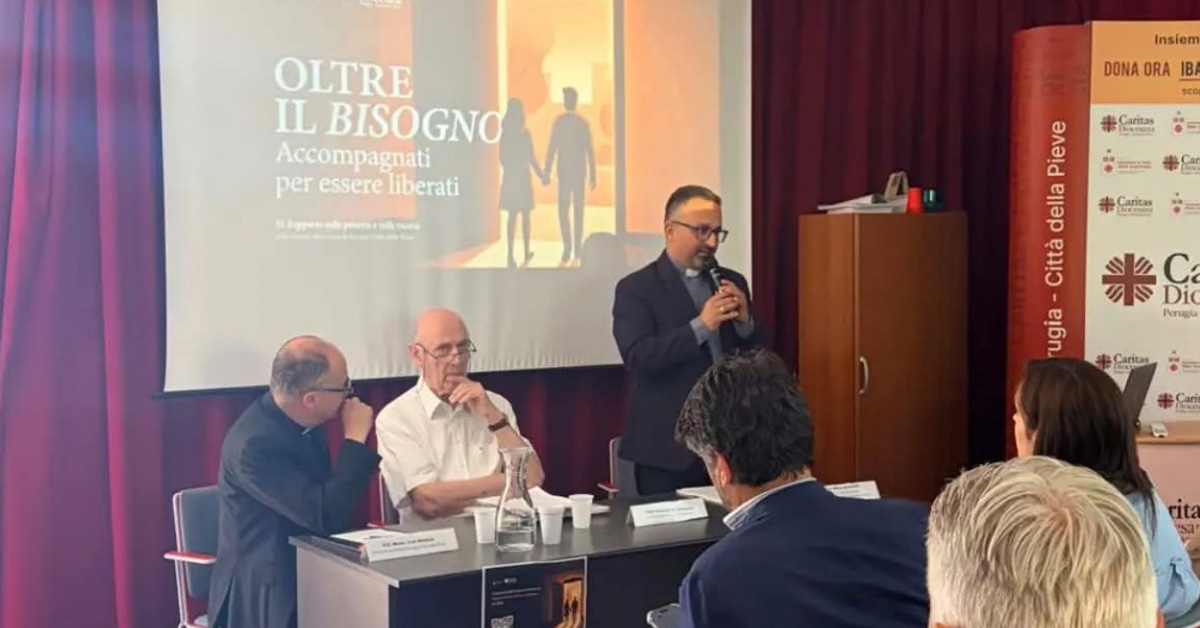
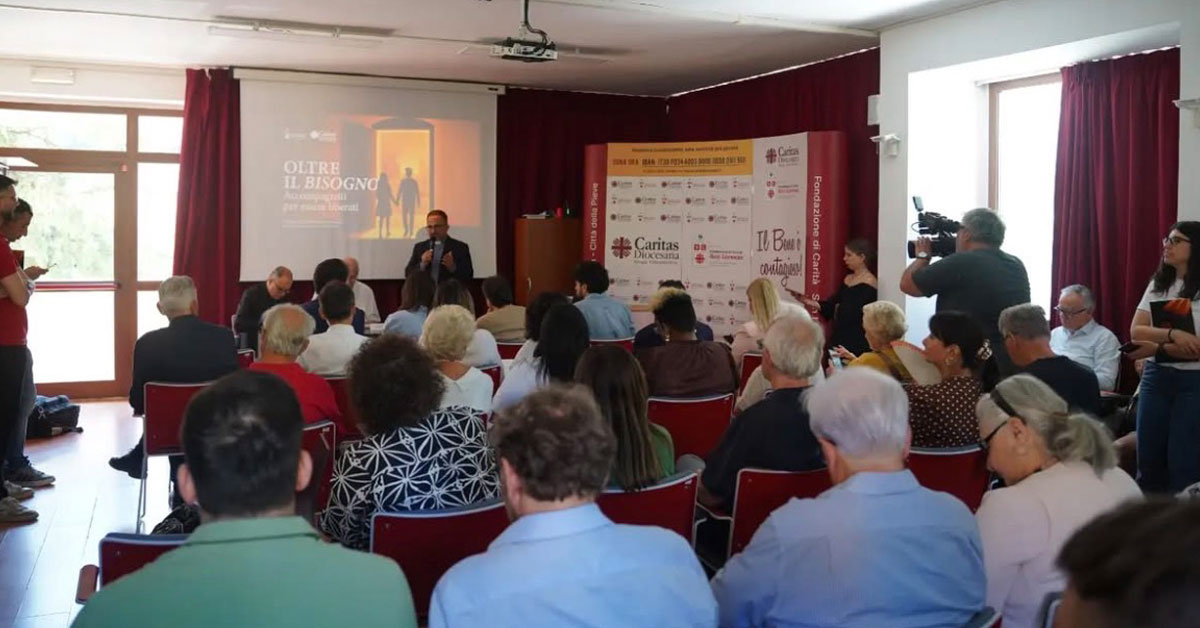
In recent days, the 11th Report on Poverty and Resources by Caritas diocesana di Perugia-Città della Pieve, entitled "Oltre il bisogno: accompagnati per essere liberati", was presented at Villaggio della Carità – Sorella Provvidenza in Perugia.
The report offers a picture of a territory where fragilities do not disappear, but change shape. Alongside the more familiar forms of poverty, new vulnerabilities are emerging, affecting workers, families, young adults, older people and citizens who, despite being part of social and economic life, find it increasingly difficult to cope with the rising cost of living.
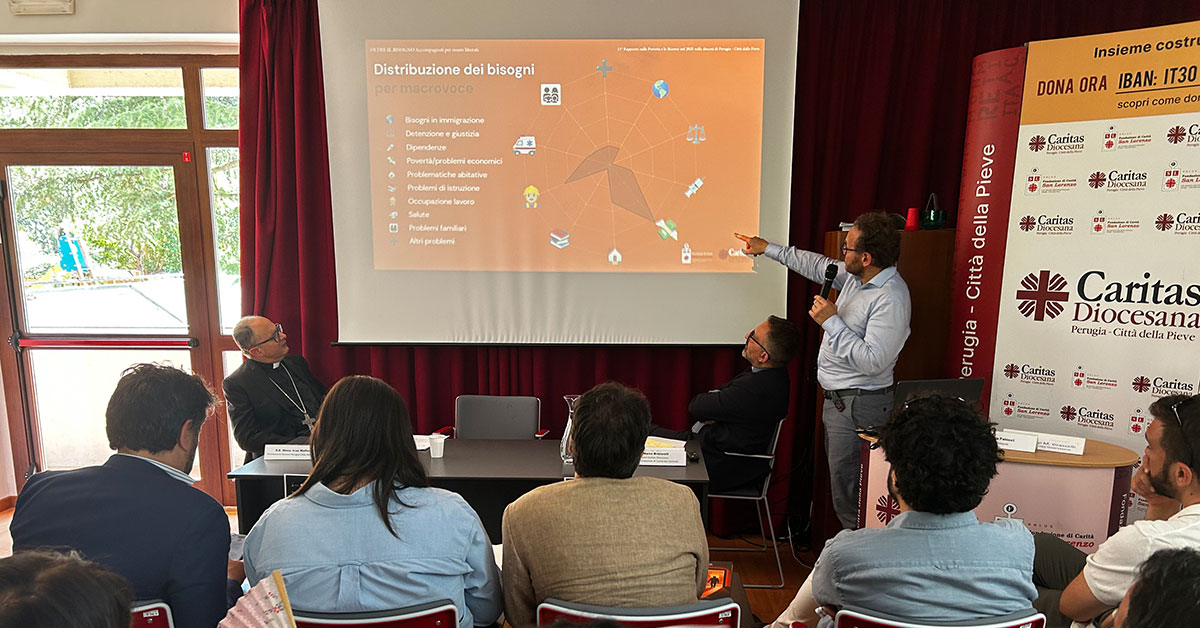
The data collected during 2025 show an increase in requests for help and a growing complexity of needs. Economic difficulties are intertwined with housing, employment, relational and health-related problems, confirming that poverty today is a multidimensional phenomenon requiring equally complex responses.
Among the issues addressed during the presentation, the phenomenon of the working poor emerged strongly: people who work but who, despite having a job, continue to live in conditions of economic fragility. High rents, insufficient wages, discontinuous contracts and rising essential expenses are making it increasingly difficult to maintain financial stability, even for those who have an income.
Another particularly significant issue concerns the growing phenomenon of over-indebtedness. More and more families are dealing with debts accumulated over time, often generated not by extraordinary consumption but by the need to cover daily expenses, health emergencies, housing costs or unexpected family needs. These situations risk becoming a spiral that is difficult to interrupt without adequate tools for support and guidance.
During the meeting, attention was also drawn to the issue of mental health, which is increasingly intertwined with people’s economic and social conditions. Job insecurity, housing instability, loneliness and the lack of support networks can have a deep impact on individual and family wellbeing. Poverty, in fact, is not only about what is missing materially, but also about the possibility of imagining the future, building relationships and feeling part of a community.
Within this framework, many women’s stories also find space. Italian women, women from other countries, women who have acquired Italian citizenship or who live paths of multiple belonging. Different stories that often meet around common challenges: balancing work and care, managing the family budget, looking for a home, supporting children and older people.
For many of them, work represents both a resource and a fragility. Often employed in care services, domestic work, assistance or other essential sectors, they make a decisive contribution to the wellbeing of families and the community, while facing working conditions that are not always stable or adequately recognised.
Age-related data also reveal a complex reality. Alongside older people, situations of vulnerability involving working-age adults and family households continue to increase, even among those who have an income but face growing difficulties in meeting everyday expenses.
One of the most significant aspects emerging from the Report concerns precisely the complexity of the stories encountered through listening services. Behind every number there are different life paths, marked by economic changes, migration, separation, illness, job loss or simply by the accumulation of fragilities that no person should have to face alone.
For this reason, the message running through the entire Report goes beyond simple assistance. Accompanying people means building relationships, listening, guiding and creating the conditions for them to regain tools, opportunities and trust.
"Oltre il bisogno" is not only the title of a Report. It is an invitation to look at poverty in all its complexity, moving beyond stereotypes and simplifications. Because today vulnerability can take many different forms and pass through very different experiences. Recognising it is the first step towards building more inclusive and supportive communities, capable of leaving no one behind.