

ScomodƏ: The Right to Be Here
There are words that hit us like slogans. And then there are others that, the moment we read them, make us stop.
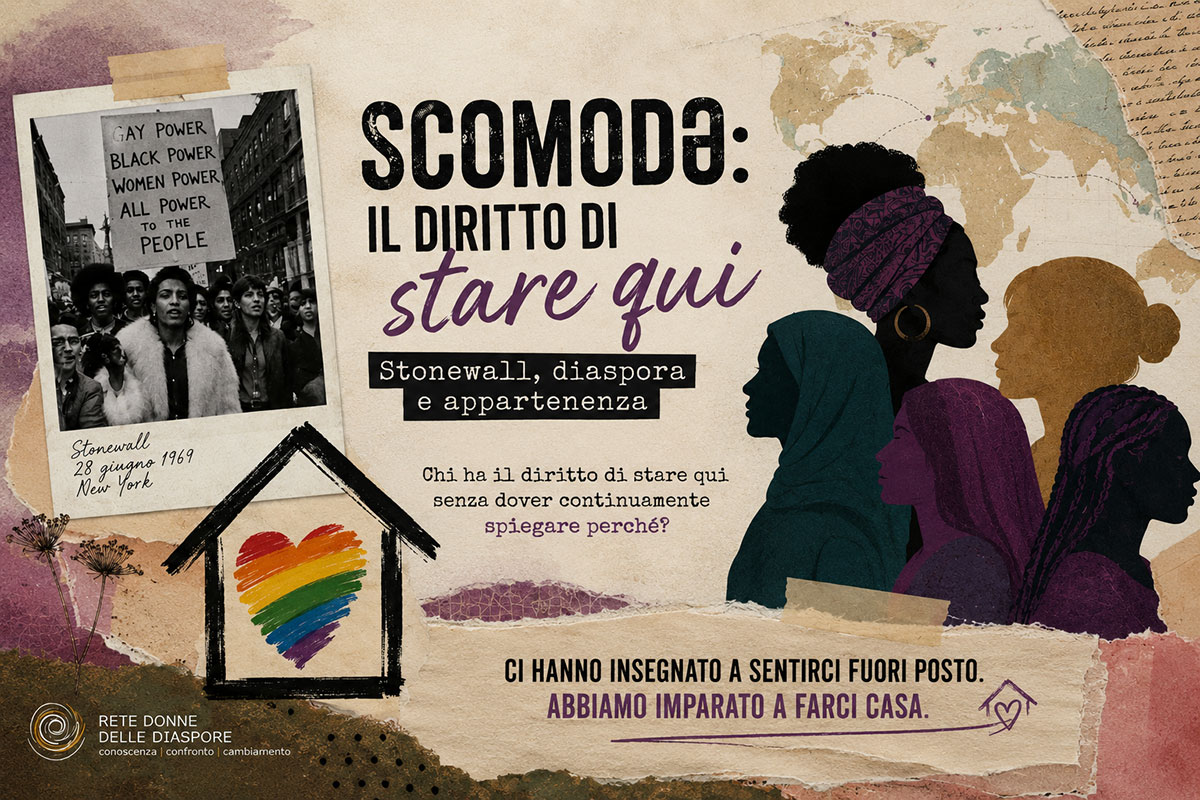
ScomodƏ, the theme of Umbria Pride 2026, belongs to the second category. It does not speak only about LGBTQIA+ identities. It speaks about bodies, languages and presences that do not easily fit into spaces already prepared for them. It speaks about what interrupts habit and invites us to rethink the unspoken rules of living together. That is why, when reading this word, our thoughts inevitably return to Stonewall.
On the night between 27 and 28 June 1969, in New York, people who had long been considered out of place decided they would no longer step back. LGBTQIA+ people, trans people, drag queens, racialised people, people living in poverty. Different lives brought together by a shared experience of being considered unwanted, marginalised or invisible. Stonewall is not only a historical event.
It is a question that continues to resonate today: Who has the right to be here without constantly having to explain why?
Not because these experiences are the same, but because many stories of exclusion meet at a common point. The history of diasporas knows this feeling well. It knows what it means to live between different languages, different forms of belonging and different imaginaries. It knows what it means to move across different worlds, searching every day for a balance between who we are and who others expect us to be. ScomodƏ can also mean this: learning to recognise what we take for granted and what we continue to perceive as an exception. Within this reflection lies another, more delicate question. LGBTQIA+ people within diasporas often experience a double exposure: on one side, discrimination linked to sexual orientation or gender identity; on the other, discrimination connected to origin, accent, skin colour, citizenship or social position.
Sometimes these forms of exclusion accumulate in visible ways. At other times they appear more subtly: in public services, in institutions, in barriers to access, or in words left unspoken. Recognising this does not mean placing different forms of suffering in competition with one another. It means understanding that real lives never fit into a single category.
Diasporic communities themselves, of course, are not immune to prejudice. Like all human communities, they carry traditions, beliefs, faith journeys, fears and contradictions. For this reason, dialogue around LGBTQIA+ rights is not always straightforward. Many people have found themselves questioning inherited ideas, cultural models learned in childhood and beliefs shaped within their families, communities and faith traditions. Not to deny their own history. But to look at it with new eyes. To recognise that the dignity of every person comes before the categories through which we learned to understand the world.
Perhaps this, too, is the deepest meaning of ScomodƏ: not the celebration of distance, but the courage to cross it. And so Stonewall continues to speak to us not only as the memory of the LGBTQIA+ movement, but as a symbol of every presence that has had to claim the right to be visible without asking permission.
We were taught to feel out of place.
We learned to make that place our home.