


Agenda 2030 and Diaspora Women: Beyond the Stereotypes of Public Narratives
Diaspora women are often portrayed as “vulnerable subjects”.
According to the United Nations, migrant women represent nearly half of the global migrant population and make a significant contribution to the economic and social systems of their countries of arrival.
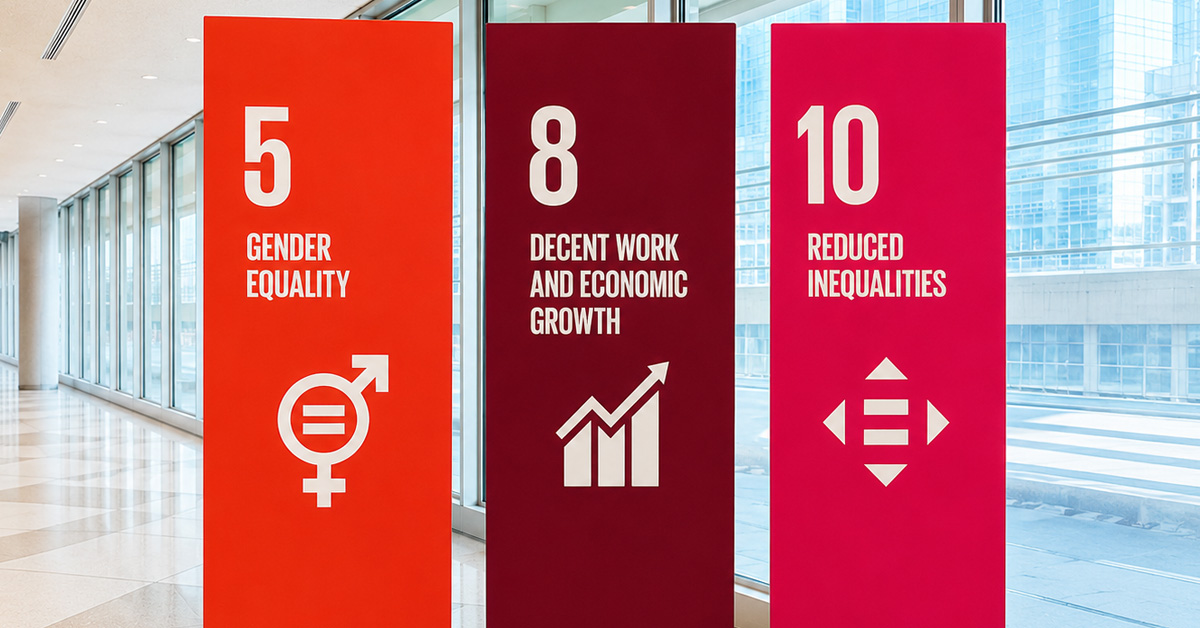
Within the framework of the 2030 Agenda for Sustainable Development, this issue directly relates to at least three Sustainable Development Goals:
SDG 5 (Gender Equality): because inequalities are not linear. Diaspora women often experience a redefinition of their social and professional roles in their countries of arrival, navigating complex pathways of recognition, autonomy and transformation.
SDG 8 (Decent Work and Economic Growth): the work of migrant women cannot be reduced to a single category. Alongside roles in care and assistance, many women are entrepreneurs, skilled workers, professionals, public service employees, educators, NGO workers, trade union representatives and actors within the third sector. Others lead associations, businesses and community networks, creating new forms of economic participation and social engagement.
SDG 10 (Reduced Inequalities): the challenge is not only economic, but also concerns social and professional recognition. The experiences of diaspora women show that skills and expertise do not disappear through migration; they are often renegotiated, reinvented or undervalued within host societies.
In this sense, speaking about diaspora women means recognising a plural and diverse reality:
not only care work, but also professional expertise, associative leadership, entrepreneurship, civic participation and cross-cutting skills that extend across different sectors.
It is precisely at this point that the work of our network takes shape: a political and social space in which diaspora women are not represented as the “object” of inclusion, but as active agents of transformation.
A network that brings together different experiences—work, associations, entrepreneurship, education and activism—to affirm that recognition is not a symbolic gesture, but a structural issue of access, rights and power.
Diaspora women are not a category to be described, but a social and economic force that is already transforming the territories in which they live.
Recognising this is not a symbolic act: it is a political choice.