


Peace and Social Mediation: Diaspora Women Against All Forms of Conflict
Conflicts do not affect only the territories where they occur. They also affect people, families, relationships and communities, producing consequences that go beyond geographical and political borders. For diaspora women, this reality is part of everyday life: living in contexts of relative peace while emotional, family and social ties continue to face instability, violence and conflict in their countries of origin.
It is not only a matter of geographical distance. Interrupted communications, unexpected news, constant concern for family members and friends, forced migration, and economic and social difficulties make conflicts a tangible presence even for those who live far away.
In this context, diaspora women represent an important social and political reality. Women from different countries, cultures and life paths share experiences, practices of solidarity and spaces for mutual listening, while keeping respect for individual stories and diverse life trajectories at the centre.
Diaspora networks are not merely places of cultural belonging. They are living spaces of connection between territories and communities, capable of fostering dialogue, relationships and social mediation. Within these spaces, bonds are built across borders and linguistic, religious and cultural differences, without erasing them.
In public narratives about conflict, women are often portrayed exclusively as victims or vulnerable individuals. However, the experiences of diaspora communities reveal a more complex reality. Women are also those who hold family and social relationships together, sustain networks of solidarity, facilitate dialogue between communities and help keep channels of communication open even during the most difficult times.
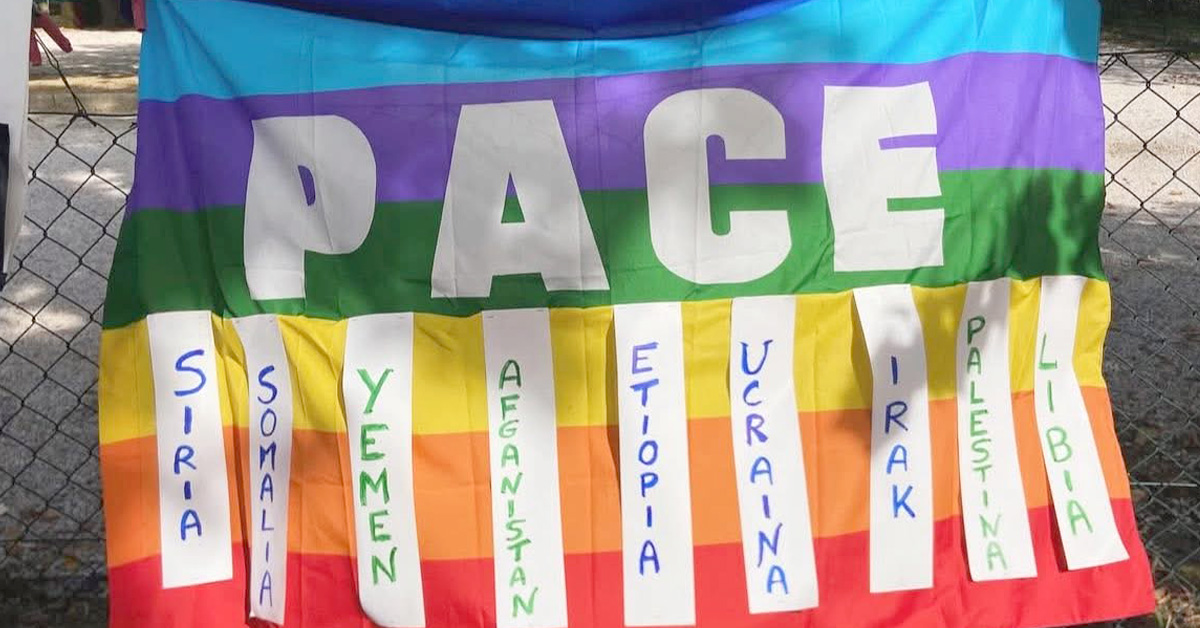
This role of social mediation is expressed in everyday life: through listening, care, mutual support and the ability to create connections between different worlds. It is often invisible work, yet essential for maintaining human and community relationships affected by conflict.
Collective experiences such as Il filo delle voci, promoted by Rete Donne delle Diaspore, demonstrate how differences can be transformed into opportunities for listening and dialogue. Women from diverse backgrounds share reflections, memories and lived experiences, creating a common space based on dialogue and mutual recognition.
In this sense, speaking about peace does not mean referring to an abstract concept detached from everyday life. Rather, it means recognising the value of relationships, social mediation and the ability to keep channels of communication open between people and communities, even in times of greater tension.
Through their daily practices, diaspora women contribute to countering all forms of conflict by promoting dialogue, listening and coexistence across differences. Their presence is often quiet but deeply meaningful, helping to connect fragments of different worlds and reminding us that peace also passes through the human relationships we choose to nurture every day.